

Bali in Golden Khaki, a hand-loomed 100% wool Antrim rug, anchoring the seating area in an open living room. Photo courtesy of Stanton Carpet.
Plenty of Eastside homes have hardwood floors, a staircase, or both. Hardwood looks great, but from October through spring it can feel cold underfoot, echo-y, and slippery in socks. An area rug or stair runner is one of the simplest ways to fix all of that without replacing a single board.
Here at Eastside Carpets and Floors in Redmond, we help homeowners pick and size rugs and runners every week. Many of them come from Stanton Carpet, a manufacturer we carry that has made carpet, rugs, and runners since 1980. Here's why they're worth a look, and what to think about before you buy.
Why Area Rugs and Stair Runners Make Sense
Warmth and comfort underfoot
A rug puts a soft layer between your feet and a cool floor. That matters in a Pacific Northwest winter, when you want the living room to feel cozy on a gray afternoon. Wool is a classic choice for this. Stanton notes that it's naturally resilient, so it resists crushing and matting, and that it "can hold 30% of its weight in moisture," which helps it act as a natural humidifier.
A quieter house
Hard surfaces bounce sound around, and bare stairs are the worst offenders. A runner on the stairs and a rug in the main living space soak up much of that noise, so open-concept homes feel calmer.
Safer stairs
Polished treads and socks don't mix. A securely installed runner adds grip on every step, which matters for little kids, older family members, and pets who struggle on slick wood.
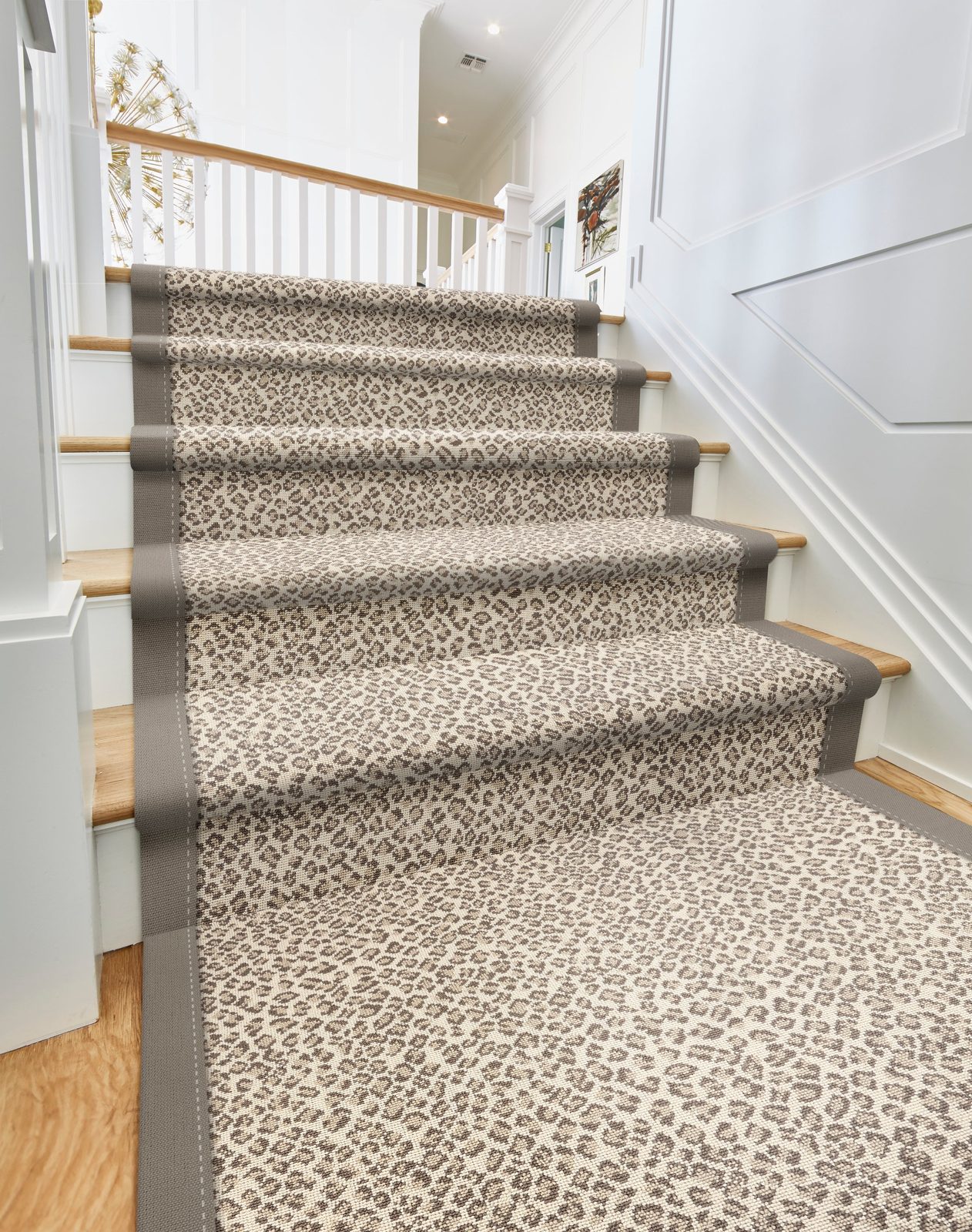
Felix Remix in Snow Leopard, a Stanton stair runner. Photo courtesy of Stanton Carpet.
Protecting your hardwood and stair treads
Foot traffic wears a path down the middle of stair treads and through hallways. A runner or rug takes that wear instead, so the wood underneath keeps its finish longer. A rug can be replaced or rotated. Refinishing a staircase is a much bigger job.
Style, and a way to define spaces
In an open floor plan, a rug tells you where the living room ends and the dining area begins. A runner can turn a plain staircase into a real design feature. Stanton's broadloom line includes a wide range of looks:
Classic patterns: Carlton (Stanton Herringbone collection) and Mitchell (Stanton Plaid collection), a windowpane plaid. Both are Wilton-woven in an 80% wool / 20% nylon blend.
Geometric and animal designs: Demetrius Remix, a Greek key–inspired geometric Wilton weave, and Felix Remix, a snow-leopard look that's Wilton woven in an 80% wool / 20% nylon blend.
Tailored flatweaves: Daytona (New Wave collection), a wool-blend flatweave with fine vertical stripes.
Natural textures: Stanton's Antrim brand, known for chunky wool textures, such as the hand-loomed, 100% wool Bali stripe (shown at the top of this post in Golden Khaki).
Custom sizing: cut, bound, and made to fit
Many Stanton carpets are sold as broadloom: wide rolls (often 13'2") that can be installed wall to wall or cut and finished into a rug or runner of almost any size. Stanton puts it simply: "Whether choosing wall to wall or custom sized rug or runner, Stanton has a style to elevate every interior." Its custom rug program lists edge finishes that include hand serging, machine serging, a "modern edge," and mitered or folded corners. So if your staircase, hallway, or dining room is an odd size, you're not stuck with what's on the shelf. Stanton also runs The Stanton Rug Company for ready-made, in-stock rugs if you'd rather not wait for a custom piece.
Easy to update
Flooring is a big, permanent decision. A rug isn't. When you repaint or get tired of a look, a new rug or runner refreshes the room for far less cost and disruption than new floors.
Pet- and kid-friendly options
Busy households have good choices. Stanton points out that wool is "inherently stain resistant," and nylon is a "family-friendly use anywhere fiber" that's highly durable and resists moisture. For homes with pets, Stanton's Pet Guard collection, including styles like Gwen and Trent, uses 100% solution-dyed polyester that resists stains and fading.
Choosing a material
Here's a quick, plain-language summary based on Stanton's own fiber guide:
Wool: Resilient, naturally stain resistant, and recommended by Stanton for "family spaces, bedrooms, stairs, and other high-traffic areas."
Wool/nylon blends: "The nylon enhances the strength of the wool." This is a popular choice for stair runners.
Nylon: The most durable synthetic, with good cleanability and texture retention.
Polyester (polysilk): Lustrous and stain resistant. Stanton recommends "only the densest constructions for stair application."
Viscose: Soft and silky, but intended for low-traffic spaces. It "does not react well with liquid spills," so it isn't a good fit for stairs or entryways.
Polypropylene (outdoor): For patios and covered porches, Stanton Outdoor styles like Johanna, a flat-woven stripe in 100% solution-dyed, UV-stabilized polypropylene, are designed for outdoor living spaces.
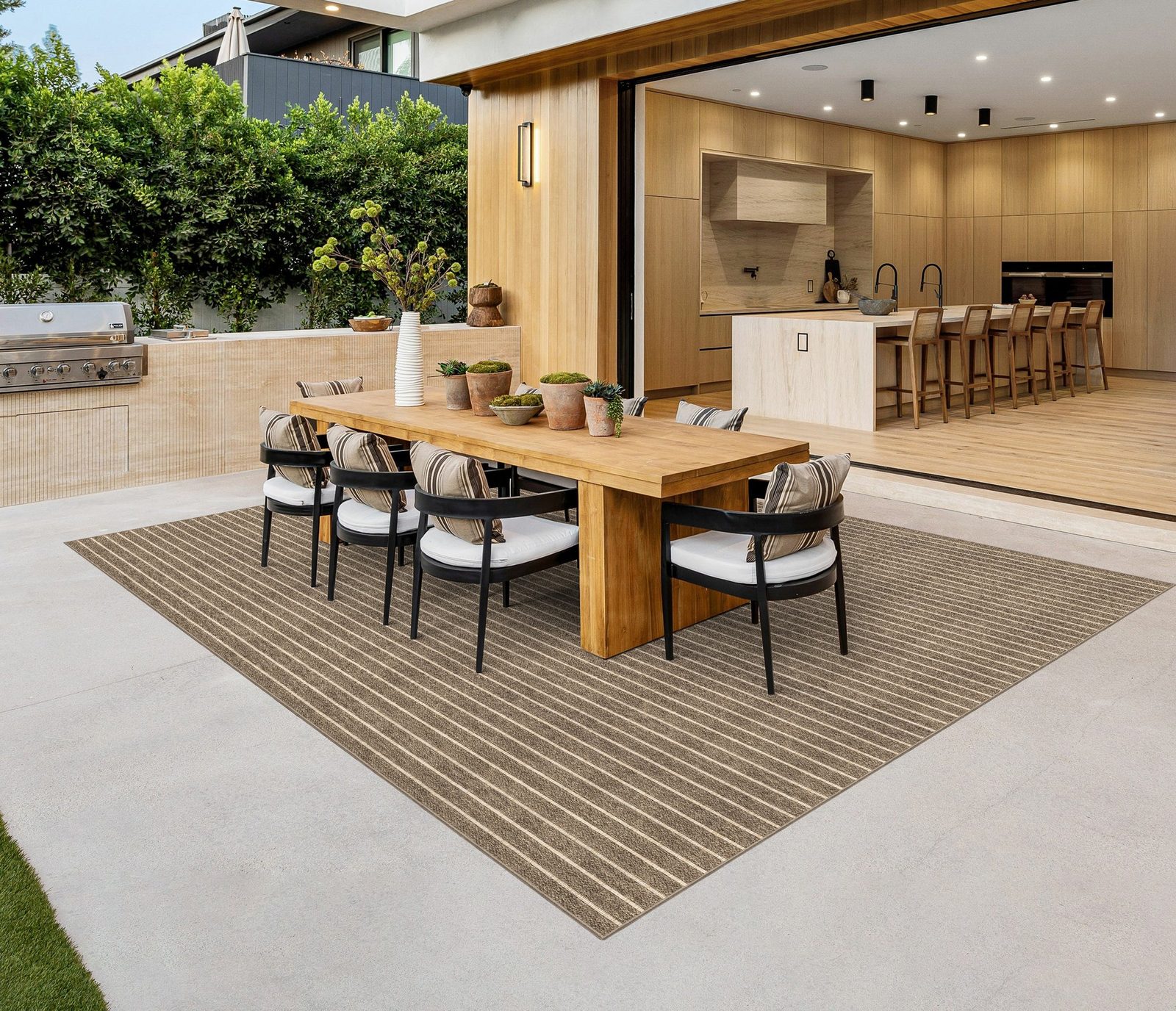
Johanna in Cobblestone, a Stanton Outdoor flatweave in UV-stabilized polypropylene, under a patio dining set. Photo courtesy of Stanton Carpet.
How to Choose the Right Runner or Rug
Measuring your stairs
For a runner, measure the depth of one tread and the height of one riser, add them together, and multiply by the number of steps. Then add extra for landings and for finishing the ends. Most runners leave a few inches of wood showing on each side, so measure your stair width and decide how much wood you'd like to frame the runner. Turns and landings take extra planning, so a professional measure pays off.
Waterfall vs. Hollywood installation
Waterfall: The runner flows straight down from the edge of one tread to the next riser, leaving a small gap under the nose of each step. It's simple and clean, and it works well with thicker carpet and most patterns.
Hollywood (also called upholstered): The runner is wrapped tightly around the nose of each tread and tucked under it, so it follows every contour of the stair. It looks tailored and custom, and it works best with thinner, more flexible materials.
Don't skip the pad
A good pad keeps a rug from sliding, adds cushion, and helps protect the floor underneath. For padding, Stanton recommends "either a 40-oz. synthetic felt or a high-density solid rubber pad." On hardwood, ask us about a pad that's safe for your floor's finish.
Sizing an area rug
In a living room, aim for a rug large enough that at least the front legs of your sofa and chairs rest on it. In a dining room, leave enough rug past the table that chairs stay on it when pulled out.
Think about our rainy season
From fall through spring, Eastside entryways see a lot of wet shoes, muddy paws, and damp umbrellas. Choose easy-care, durable fibers near doors and on the main stairs. For covered porches and entryways, Stanton's Stanton Outdoor collection (like Johanna, pictured above, and Coral Bay) uses UV-stabilized polypropylene designed for patios, porches, and entryways. Once rugs are down, Stanton recommends a suction-only canister vacuum (or setting the brush as high as possible) to keep wool and woven carpets looking their best.
Come See It in Person
Colors and textures never look quite the same on a screen, and Stanton itself recommends seeing products in person before you buy. If you're thinking about a runner for your stairs or a custom rug for a room that's been hard to size, stop by the Eastside Carpets and Floors showroom in Redmond, WA. Touch the samples, compare wool and blends side by side, and talk through your space with our team. Or request a free estimate, and we'll come measure and help you find the right fit for your home.


