
Choosing Carpet for a Hallway That Gets Used Every Day
A hallway may not be the largest space in your home, but it often works harder than almost any other area. Family members pass through it on the way to bedrooms, bathrooms, home offices, and living rooms. Children run back and forth, pets follow the same route all day, and guests may arrive with damp shoes. During the Pacific Northwest’s rainy months, moisture and outdoor debris can quickly make their way indoors.
That repeated movement places concentrated pressure on a narrow strip of flooring. Unlike a bedroom, where traffic is spread across the room, a hallway tends to develop a clear walking lane. The wrong carpet may flatten, show soil, or lose its texture sooner than expected.
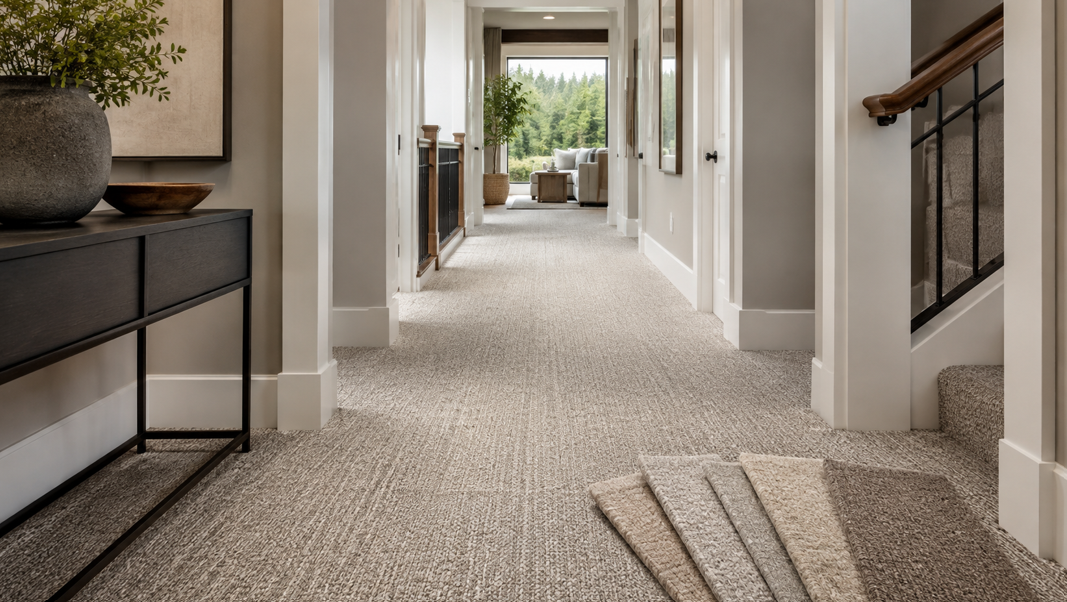
The best carpets for high-traffic hallways are dense, resilient, stain-resistant, and easy to maintain. Nylon, triexta, and well-constructed solution-dyed polyester are all worth considering. Textured, patterned, and lower-profile styles can also help disguise footprints and everyday wear.
Homeowners in Bellevue and Bothell can work with Eastside Carpets & Floors to compare options in their own lighting and surroundings. With more than 30 years of flooring experience, a mobile showroom, free in-home estimates, and professional installation, the team can help narrow down choices based on traffic, household activity, comfort, and design.
A hallway carpet needs to do more than look good on installation day. The strongest choice comes from considering fibre, density, pile height, colour, stain protection, padding, installation, and maintenance as one complete system.
What Makes a Carpet Suitable for High-Traffic Hallways?
Softness alone does not tell you how a carpet will perform after years of repeated use. Hallway carpet needs enough structure to resist crushing while still providing the warmth and comfort people expect from residential flooring.
Fibre Resilience
Resilience describes a carpet fibre’s ability to recover after being compressed. In a hallway, the same fibres are stepped on repeatedly, so recovery matters. More resilient carpet is less likely to develop a permanently flattened path through the centre.
Nylon is widely known for resilience, but fibre type is only part of the picture. Density, twist, backing, and overall construction also influence long-term appearance.
Carpet Density
Density refers to how closely the fibres are packed together. Dense carpet generally provides better support and resists matting more effectively than a loosely constructed product.
One simple way to inspect a sample is to bend it gently backwards. If the backing becomes highly visible right away, the fibres may be spaced farther apart. This can be a helpful observation, but it does not replace product specifications or expert guidance.
Twist and Pile Height
Many cut-pile carpets are made with bundles of fibres twisted together. Tighter, well-set twists can help the surface hold its shape and conceal footprints. Very tall, loose carpet may be more likely to crush along a hallway’s main walking path.
Low- and medium-pile options often provide a practical balance of comfort, durability, and easier vacuuming. That does not mean every plush carpet is unsuitable. A well-constructed product with an appropriate traffic rating may still perform well.
Manufacturer Ratings and Warranties
Review the residential traffic rating, stain warranty, texture-retention warranty, and care instructions. Coverage may depend on approved installation methods, cleaning schedules, and record keeping.
A hallway-ready carpet will usually offer dense construction, good fibre recovery, a practical pile height, strong texture retention, suitable stain protection, and a rating for heavy residential traffic.
Best Carpet Fibres for Busy Bellevue and Bothell Hallways
Carpet fibre affects resilience, stain performance, softness, appearance, and price. There is no single best choice for every home. Consider who uses the hallway, how often it is cleaned, whether pets or children are present, and how long the flooring is expected to remain in place.
Nylon Carpet
Nylon carpet is one of the strongest all-around choices for a demanding hallway. It is known for resilience and its ability to recover after compression, which helps it maintain texture in spaces with repeated foot traffic.
Nylon is especially useful for active family homes, upstairs hallways, stair landings, and corridors near main living areas. It is available in a broad selection of colours, patterns, and textures.
Some nylon carpets include advanced stain treatments, while solution-dyed nylon products receive their colour during manufacturing in a way that can improve colourfastness and stain resistance. Product quality still varies, so compare density, pile construction, warranty coverage, and traffic ratings.
Triexta Carpet
Triexta carpet is valued for its soft feel and stain resistance. Many products are designed for family-friendly use, making triexta worth considering for homes with children, pets, or frequent guests.
Its potential advantages include comfortable texture, strong resistance to many household stains, good colour retention, and contemporary style options. A dense triexta carpet with a suitable traffic rating can work well in a hallway.
As with any fibre, construction matters. A low-density product will not automatically perform well simply because it is made from triexta.
Solution-Dyed Polyester Carpet
Solution-dyed polyester carpet can offer softness, rich colour, and stain resistance at a value-focused price point. It may suit moderate-to-busy hallways when the chosen product has dense construction and an appropriate residential rating.
Polyester does not always match nylon’s resilience under severe traffic. Lower-profile textures and denser constructions tend to be better suited to hallways than loose, overly plush styles.
Wool Carpet
Wool carpet offers natural character, warmth, visual depth, and resilience. It can create a refined look in design-focused Bellevue homes where natural materials and premium finishes are priorities.
Wool can perform beautifully, but it benefits from consistent care. Prompt spill response, appropriate cleaning products, moisture control, and professional maintenance help protect its appearance.
For a quick comparison:
Choose nylon for demanding resilience and long-term texture retention.
Choose triexta for softness and family-friendly stain performance.
Choose solution-dyed polyester for colour, comfort, and value.
Choose wool for premium natural beauty and warmth.
Homeowners can explore a range of carpet flooring in different fibres, colours, textures, and performance levels. Larger samples viewed at home often make the decision easier.
Carpet Styles That Hide Wear, Footprints, and Everyday Soil
The surface style affects how quickly daily traffic becomes visible. In a high-use hallway, practical styles often create texture, variation, or subtle pattern.
Textured Cut-Pile Carpet
Textured cut pile uses fibres positioned at slightly different angles, which helps break up light and reduce the visibility of footprints and vacuum marks. It offers a comfortable residential appearance without looking overly formal.
This style suits homeowners who want softness with a practical finish for everyday movement.
Frieze Carpet
Frieze carpet uses tightly twisted fibres that create a slightly curled, informal surface. Its texture can disguise footprints, shading, and small changes in appearance.
A dense, appropriately rated frieze may work well in a busy hallway. Very long or loose styles can be harder to vacuum, so a medium or lower profile often provides a better balance.
Patterned Carpet
Patterned carpet can add visual interest while helping disguise lint, soil, and traffic variation. The design does not need to be bold. Tonal geometrics, understated lines, and small-scale motifs can create dimension without overwhelming the corridor.
A subtle pattern may give a Bellevue hallway a polished look, while a heathered design can provide practical visual forgiveness in an active Bothell home.
Loop-Pile Carpet
Loop-pile carpet has a clean, structured surface and often comes in lower-profile constructions. Dense loops can perform well under frequent traffic.
Pet owners may want to consider claw activity before choosing loop pile. Some pets are more likely to catch claws on exposed loops, so a cut-pile alternative may be more suitable.
Carpet Tile
Carpet tile can work in home offices, finished basements, commercial corridors, or flexible-use spaces. Individual sections can be replaced if one area becomes damaged or worn.
Its appearance and underfoot feel differ from residential broadloom carpet, so it will not suit every hallway. Compare larger samples in the space before making a final decision.
Choosing Colours and Patterns for a Practical Hallway
Colour affects more than style. It also influences how visible dust, lint, pet hair, soil, and traffic marks will be between cleanings.
Mid-Tone Colours for Everyday Practicality
Very light carpet may reveal soil more quickly, while very dark carpet can show lint and pale pet hair. Mid-tone shades often provide the most forgiving balance.
Practical options include warm taupe, mushroom, soft greige, medium grey, muted brown, flecked beige, and heathered neutrals.
These are not rigid rules. A light carpet may work in a quieter upstairs corridor, while a dark patterned carpet may suit a dramatic interior. Cleaning habits, natural light, and household activity all matter.
Flecked and Heathered Finishes
Flecked and heathered carpets combine closely related tones. That variation can help conceal small particles and everyday shading better than a completely solid colour. It is especially useful in busy family homes, though it does not replace regular cleaning.
Coordinating With Adjacent Flooring
Hallways often meet hardwood, luxury vinyl, tile, or waterproof flooring. Rather than trying to match every surface exactly, compare undertones.
Warm hardwood may pair well with beige, warm greige, or taupe carpet. Cooler flooring may coordinate with balanced grey or cooler neutrals. The aim is a smooth visual transition, not a perfect colour duplicate.
Testing Samples at Home
View samples in morning, afternoon, and evening light. Pacific Northwest cloud cover can soften natural light, and carpet may appear warmer, cooler, lighter, or darker than it did in the showroom.
Place samples beside wall paint, trim, doors, stair finishes, nearby furniture, and adjoining flooring. This makes it easier to choose a colour that works throughout the day.
Why Padding and Installation Matter as Much as the Carpet
Even a well-made carpet may underperform if it is paired with unsuitable padding or installed incorrectly. Carpet, padding, and installation function as one flooring system.
Selecting the Right Carpet Padding
Padding supports the carpet, absorbs impact, improves comfort, and can contribute to sound control. The thickest pad is not automatically the best choice for a hallway.
Busy passageways often benefit from firm, durable padding that supports the carpet under repeated traffic. The padding also needs to meet the manufacturer’s specifications. Using the wrong thickness or density may affect performance or warranty coverage.
Quality padding can provide better underfoot support, reduce impact on the backing, improve comfort, and absorb sound between levels. Moisture-resistant features may appeal to households with pets or children, but ask what the product protects and how spills need to be handled.
Professional Stretching and Seaming
Correct stretching helps broadloom carpet remain smooth and secure. Poor tension can contribute to ripples, movement, or uneven wear.
Hallway seams require thoughtful placement because corridors often connect several rooms and include doorways, corners, or stair openings. A professional installer can plan the layout to reduce visible seams and create a cleaner result.
Pattern Alignment and Transitions
Patterned carpet requires careful alignment around doors, turns, and stair openings. Installation planning also includes door clearance, baseboards, transition strips, stair edges, and connections to hard-surface flooring.
An in-home estimate allows the flooring professional to assess these details before materials are ordered. It can also identify subfloor concerns or unusual angles that may not be obvious from a basic floor plan.
Keeping Hallway Carpet Looking Fresh
Hallway maintenance does not need to feel demanding. A consistent routine can help preserve colour, texture, and overall appearance while reducing abrasive soil buildup.
Vacuum High-Traffic Areas Regularly
Foot traffic can push small particles between carpet fibres. Over time, those particles may contribute to dullness and visible wear.
Vacuuming frequency depends on household activity. Homes with children, pets, or exterior doors near the hallway may need more frequent attention than quieter homes.
Use a vacuum suitable for the carpet style. Follow the carpet and vacuum manufacturers’ recommendations for settings and attachments.
Use Entry Mats Strategically
Place quality mats near exterior doors to capture moisture, grit, and mud before they reach the hallway. Clean the mats regularly so they continue to work effectively.
In rainy Bellevue and Bothell weather, a well-placed entry mat can reduce the amount of moisture and debris tracked onto carpet.
Address Spills Promptly
Blot spills with a clean, absorbent cloth rather than rubbing them. Rubbing can spread the spill or push it deeper into the fibres.
The correct cleaning method depends on the fibre, stain type, and manufacturer instructions. Avoid unapproved cleaners that may leave residue, alter colour, or affect warranty coverage.
Watch Turning Points
Hallway corners, stair landings, and doorways often receive extra pressure because people slow down, pivot, or change direction there. Give these areas a little extra attention during regular cleaning.
Arrange Professional Cleaning When Appropriate
Professional cleaning can remove embedded soil that routine vacuuming may not reach. The right schedule depends on traffic, warranty requirements, pets, and the selected carpet.
Keep purchase, installation, warranty, and cleaning records together. A simple routine includes regular vacuuming, clean entry mats, prompt spill care, approved products, attention to turning points, and professional cleaning as recommended.
Finding the Right Hallway Carpet for Your Home
A high-traffic hallway does not need to look purely functional. The right carpet can soften sound, add comfort, connect surrounding rooms, and create a polished path through the home.
Match the carpet to the household:
An active family may benefit from resilient nylon or dense triexta with a textured surface.
A home with pets may need stain resistance, strong construction, and a style that is less likely to snag.
A design-focused home may suit patterned nylon, premium wool, or another performance-rated carpet with visual depth.
A value-conscious project may work well with dense solution-dyed polyester rated for the traffic level.
A commercial or flexible-use corridor may benefit from suitable carpet tile.
Then consider the full flooring system. Fibre, density, pile height, colour, pattern, padding, and installation all influence how the hallway will look and perform.
Eastside Carpets & Floors can bring samples directly to your home through its mobile showroom, allowing you to compare options beside your paint, trim, lighting, and adjoining floors. The team can also measure the hallway, discuss padding, identify transition needs, and provide professional installation.
For homeowners in Bellevue, Bothell, and nearby Eastside communities, personalised guidance can make the selection process more straightforward. To compare durable hallway carpet options and arrange a free in-home estimate, get in touch with the Eastside Carpets & Floors team.


