
Why Basements in the Pacific Northwest Need Special Flooring Consideration
Basements are different from the rest of the home. They sit closer to the ground, tend to stay cooler, and in the Pacific Northwest, they’re often exposed to higher moisture levels throughout the year. That doesn’t mean they can’t be beautiful, comfortable spaces — it simply means flooring choices need to be made thoughtfully.
Many homeowners in Redmond, Bellevue, and surrounding areas want their basement to feel like a true extension of the home. Maybe it’s a media room, a guest suite, a play area, or even a quiet work-from-home retreat. The right flooring plays a huge role in how inviting that space feels day to day.
At Eastside Carpets & Floors, homeowners often ask whether carpet is a smart choice below ground level. The honest answer is yes — when the right products and preparation come together. Carpet can transform a basement from cold and echo-prone into a warm, comfortable space where people actually want to spend time.
The Pacific Northwest climate adds a few considerations. Seasonal rain, changing humidity, and naturally cooler temperatures can influence how flooring performs over time. That’s why it’s important to focus on materials that support comfort while also standing up to real-life conditions.
Instead of viewing basement flooring as a challenge, think of it as an opportunity. With smart planning, carpet can add softness, improve acoustics, and help the space feel finished and welcoming. The key is understanding what works — and what doesn’t — before installation begins.
When homeowners understand these basics, they’re able to make confident decisions that support both style and long-term performance. The rest of this guide breaks down exactly how to make carpet a success in basement environments across the Pacific Northwest.
What Makes Carpet a Strong Choice for Basement Spaces
Carpet remains one of the most popular choices for basements, and for good reason. When selected properly, it brings comfort and practicality that other flooring types often struggle to match in below-ground spaces.
Comfort and Warmth Underfoot
Basements naturally feel cooler than upper floors. Carpet instantly changes that experience. The soft surface helps insulate the room, making it feel warmer and more inviting year-round. Walking barefoot becomes comfortable again, which is especially important for family spaces or guest rooms.
A basement with carpet simply feels more livable. Instead of a space that feels secondary or unfinished, it becomes a cozy part of the home where people gather, relax, and unwind.
Noise Control and Acoustics
Basements often have hard surfaces that create echoes. Adding carpet helps absorb sound, which makes a big difference in media rooms, playrooms, or multi-use spaces. Conversations sound clearer, movie nights feel more immersive, and overall noise levels stay lower.
This acoustic benefit is one of the most overlooked reasons homeowners choose carpet — and one of the most appreciated once it’s installed.
Safety and Everyday Practicality
Carpet also provides a softer landing underfoot. Families with children or older adults often appreciate the added sense of stability and comfort. The surface naturally reduces slips compared to harder flooring types, creating a more relaxed and welcoming environment.
When homeowners choose the right style, comfort and durability work together beautifully. That balance is what makes carpet such a practical solution for finished basements across the region.
What Doesn’t Work: Carpet Mistakes to Avoid in Basements
Carpet can perform extremely well in basements, but certain choices can shorten its lifespan or reduce comfort. Understanding common mistakes helps homeowners avoid frustration later.
Using the Wrong Carpet Padding
Padding matters just as much as the carpet itself. Some traditional pads can trap moisture, which isn’t ideal for basement environments. Choosing the wrong type may lead to reduced airflow and long-term performance issues.
A better approach is selecting padding designed for lower-level spaces, where airflow and moisture management are considered part of the system.
Choosing High-Pile Styles in Damp Areas
Plush, high-pile carpets look luxurious, but they’re not always the best match for basements. Thicker fibers can hold onto humidity and are often harder to clean in multi-use areas.
Lower-profile styles tend to perform better because they:
Clean more easily
Dry faster if spills occur
Handle foot traffic more effectively
That doesn’t mean sacrificing style — modern low-pile options still look beautiful while supporting long-term durability.
Ignoring Moisture Conditions Before Installation
One of the biggest mistakes homeowners make is skipping preparation. Even a high-quality carpet won’t perform well if the subfloor isn’t properly evaluated first.
Simple checks before installation help ensure:
Moisture levels are appropriate
The space is properly ventilated
The flooring system performs as intended
When preparation is done right, carpet becomes a reliable and comfortable choice rather than a risky one.
Best Carpet Types for Basement Use in the Pacific Northwest
Not all carpets are created equal, especially when it comes to basement environments. Choosing the right construction and materials makes all the difference.
Low-Pile and Dense Fiber Carpets
Dense, low-pile styles are often ideal for basements. They provide a clean, modern look while standing up well to daily use. These carpets are easier to vacuum, maintain their appearance longer, and feel comfortable without being overly thick.
Homeowners who want a balance of softness and practicality often gravitate toward this category.
Synthetic Fibers vs Natural Fibers
Material choice plays a major role in performance. Synthetic fibers tend to handle moisture and wear better in basement settings compared to natural fibers.
Options commonly recommended include:
Nylon for durability
Polyester for softness and color retention
Solution-dyed fibers for stain resistance
When exploring options, many homeowners start by looking at different styles of carpet flooring to compare textures, colors, and performance features side by side.
Stain-Resistant Options for Multi-Use Spaces
Basements often serve multiple purposes — movie nights, kids’ play zones, home gyms, or guest spaces. Stain-resistant carpet technology helps protect against spills and everyday messes while maintaining a clean appearance.
Choosing a durable yet stylish product means homeowners don’t have to compromise between practicality and design. The best options blend both effortlessly.
Moisture Management: The Real Key to Basement Carpet Success
If there’s one factor that determines how well carpet performs in a basement, it’s moisture management. The good news is that it doesn’t need to be complicated.
A few smart steps make a big difference:
Check the subfloor before installation
Ensure the basement has good airflow
Use appropriate padding and installation methods
Address any known moisture concerns early
Moisture testing is often simple and helps identify whether conditions are suitable for carpet. This isn’t about making the process feel technical — it’s about setting the flooring up for long-term success.
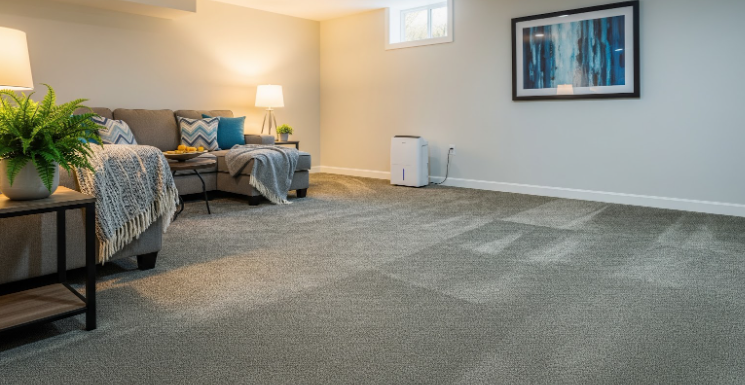
Ventilation also plays a role. Basements that circulate air effectively tend to feel fresher and support better flooring performance overall. Even small upgrades like dehumidifiers or improved airflow can help maintain a comfortable environment.
Professional installation guidance is valuable here because experienced installers understand how to adapt flooring systems to local conditions. When preparation and materials work together, carpet performs beautifully for years.
Designing a Basement That Feels Like Part of the Home
A finished basement shouldn’t feel separate from the rest of the house. Carpet helps tie the space together, creating a seamless flow that feels intentional and welcoming.
Carpet Colors That Brighten Lower Levels
Lighter neutrals and warm tones often work well in basements because they reflect available light and help rooms feel more open. Soft grays, warm beiges, and subtle textures can make a basement feel brighter without sacrificing warmth.
Color choice isn’t just about style — it shapes how the space feels emotionally.
Creating Cozy Entertainment or Family Zones
Carpet naturally supports relaxed living. Homeowners often use it to define areas like:
Family movie rooms
Kids’ play spaces
Reading corners
Guest sleeping areas
The softness underfoot encourages people to settle in and enjoy the space longer.
Pairing Carpet with Other Flooring Types
In some basements, combining materials works well. For example, carpet might be used in seating areas while another flooring type defines entry zones or utility spaces. Thoughtful transitions help the layout feel polished and cohesive without overwhelming the design.
When done well, the basement stops feeling like an afterthought and becomes one of the most comfortable areas in the home.
Signs It’s Time to Replace Basement Carpet
Even the best carpet eventually reaches the end of its lifecycle. Recognizing the signs early helps homeowners maintain comfort and appearance.
Common indicators include:
Persistent odors that don’t go away after cleaning
Visible wear patterns in high-traffic areas
A damp or heavy feeling underfoot
Flattened fibers that no longer bounce back
A look that feels outdated compared to the rest of the home
Replacing carpet isn’t just about aesthetics — it’s about restoring comfort and functionality. Newer carpet options often offer improved durability and stain resistance, making upgrades feel worthwhile.
If a basement no longer feels inviting, flooring may be the biggest factor holding the space back.
Making the Right Basement Flooring Decision for Your Home
Carpet can be an excellent choice for Pacific Northwest basements when the right products and preparation come together. The key is understanding how moisture, material selection, and installation choices influence long-term performance.
What works well:
Dense, low-pile carpets
Moisture-aware installation methods
Thoughtful design choices that brighten and warm the space
What tends to cause problems:
Ignoring moisture conditions
Choosing unsuitable padding
Selecting styles that are harder to maintain in basement environments
When homeowners approach the decision with clarity, carpet becomes a solution that adds comfort, style, and everyday livability. A finished basement should feel like part of the home — not a space people avoid.
If you’re planning a basement update and want guidance tailored to your home, we’re here to help. Whether you’re comparing styles or looking for expert advice, feel free to get in touch and explore options that fit your lifestyle and space perfectly.


