
Why Spill-Ready Flooring Matters in a Busy Home
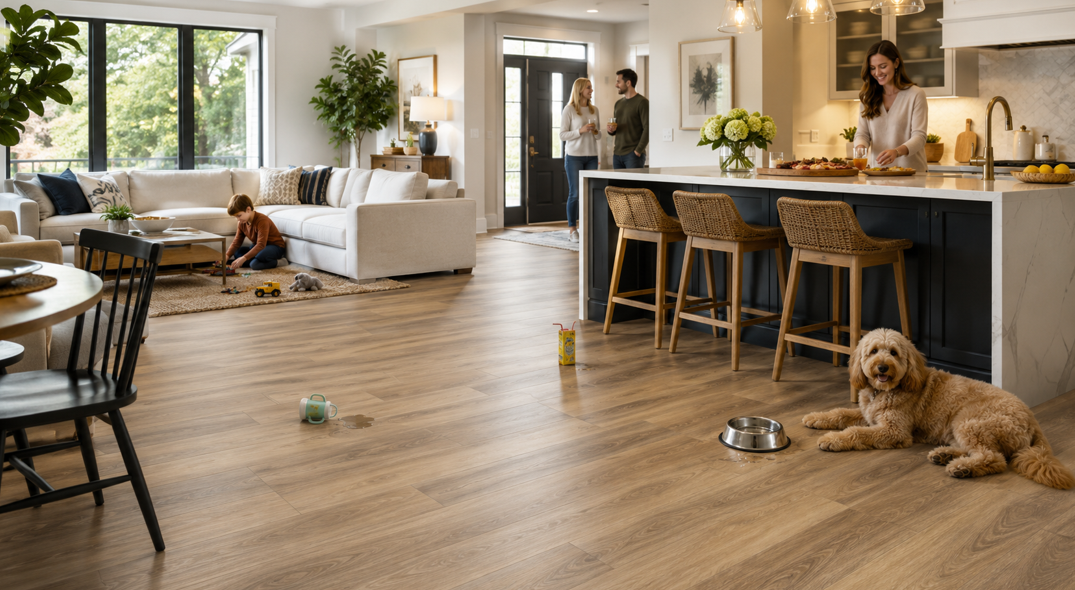
A busy household rarely stays spotless for long. Children tip over drinks, pets splash water out of their bowls, and guests track in rain from the driveway. Cooking, entertaining, school mornings, and family gatherings all create opportunities for moisture to reach the floor.
These everyday moments are especially familiar in Redmond, Bellevue, Kirkland, Bothell, Woodinville, Sammamish, and Issaquah, where wet Pacific Northwest weather can add damp shoes and muddy paws to the mix.
Luxury vinyl plank, often called LVP, is popular with active households because it combines the appearance of wood with a surface designed for practical daily use. Many products resist moisture, stains, and ordinary wear while remaining straightforward to clean.
Still, not every LVP product performs in exactly the same way. The best option for frequent spills depends on its moisture rating, wear layer, core construction, finish, locking system, installation, and care requirements.
Homeowners can work with Eastside Carpets & Floors to compare flooring samples in their own rooms. The company’s mobile showroom and free in-home estimates make it easier to view colors and textures beside cabinets, furniture, paint, and natural light.
For a spill-prone household, focus on a floor that provides:
Reliable moisture resistance
A durable protective surface
Secure plank connections
A forgiving color and finish
Straightforward cleaning requirements
Suitable traction for children and pets
Professional installation over a properly prepared subfloor
LVP cannot prevent spills, but the right product can make them much easier to manage.
Is LVP a Good Flooring Choice for Frequent Spills?
LVP is often a strong choice for kitchens, dining areas, entryways, family rooms, playrooms, and other spaces where spills are common. Its layered construction is designed to keep moisture on the surface long enough for prompt cleanup.
Moisture Stays on the Surface
Unlike flooring materials that may absorb liquid quickly, many LVP products have a nonporous surface. Juice, pet water, cooking splashes, and muddy footprints can usually be wiped away before they affect the decorative layer.
This feature is valuable in rooms where children eat, pets drink, or guests gather. It also makes routine maintenance more manageable during the school year, when mornings and evenings may feel particularly busy.
Cleaning Is Usually Straightforward
Loose dirt can normally be removed with sweeping or a hard-surface vacuum. Most spills can be cleaned with a soft cloth or damp mop and a manufacturer-approved cleaning product.
There is no need for aggressive scrubbing in most situations. Prompt blotting and light cleaning are generally more effective than allowing moisture or residue to remain on the surface.
LVP Can Extend Across Connected Rooms
Many modern homes have kitchens, dining areas, hallways, and living rooms that flow into one another. LVP can create a consistent look across these connected spaces while providing practical moisture performance.
Using one floor across several rooms can also reduce the number of transitions where crumbs, dirt, and moisture collect.
It Offers Wood-Look Style Without Natural Wood’s Exact Care Needs
LVP can reproduce the appearance of oak, maple, walnut, hickory, and other wood species. Homeowners can achieve a warm, welcoming look without following the same moisture precautions associated with some natural wood products.
Product quality varies, so design and performance need to be considered together.
Understand the Difference Between Waterproof and Water-Resistant LVP
The words “waterproof” and “water-resistant” can sound similar, but they are not always used to describe the same level of performance.
Waterproof LVP
Waterproof LVP is generally designed so the plank itself will not swell or absorb water when exposed according to the product specifications.
This can provide valuable protection against:
Spilled drinks
Pet accidents
Water around feeding stations
Rain tracked through an entryway
Everyday kitchen splashes
Moisture from damp shoes
Waterproof planks do not make the entire room waterproof. Liquid may still travel between planks, around the perimeter, beneath transitions, or into nearby walls and cabinetry.
Water-Resistant LVP
Water-resistant flooring can handle limited moisture exposure, but the manufacturer may specify how quickly spills need to be removed. Extended exposure could affect the plank, joint system, adhesive, or subfloor.
Ask the flooring specialist to explain the exact moisture rating rather than relying only on the front of a sample board.
Why Prompt Cleanup Still Matters
Even with waterproof LVP, spills are best cleaned promptly. Moisture left on the floor can create slippery areas, leave residue, or move into spaces that the plank surface does not protect.
Pet accidents also contain substances that may leave odor or discoloration if they remain for too long.
Review the manufacturer’s warranty for:
Moisture exclusions
Flooding limitations
Approved rooms
Required cleaning methods
Installation requirements
Perimeter sealing instructions
Commercial versus residential coverage
Choose a Wear Layer That Fits the Household
The wear layer is the transparent protective surface above the printed design. It helps protect the floor against scuffs, stains, scratches, and repeated foot traffic.
Wear-Layer Thickness
Wear layers are often measured in mils. A higher mil number generally indicates a thicker protective layer, although thickness is only one measure of quality.
The coating technology, surface finish, product rating, and warranty also influence performance.
A home with young children, large pets, frequent visitors, or an open floor plan may benefit from an LVP product rated for heavy residential use.
Surface Coatings
Some LVP includes enhanced coatings designed to improve resistance to scratches, stains, or surface wear. Manufacturers may use ceramic-bead, urethane, aluminum-oxide, or other proprietary finishes.
These descriptions can be useful, but compare the full product rather than choosing based on one coating term.
Ask practical questions:
Is the floor rated for active residential use?
What stains are covered by the warranty?
Does the warranty include pets?
What cleaning products are approved?
Are scratches covered or excluded?
How is ordinary wear defined?
No Floor Is Completely Damage-Proof
Durable LVP can still be scratched by grit, damaged by dragged furniture, or marked by sharp objects. A strong wear layer reduces risk, but regular care remains important.
Keep pet nails trimmed, use furniture pads, lift heavy items, and remove sand or grit before it spreads through the home.
Select a Core That Supports Busy Household Life
The core gives an LVP plank its structure. Two common rigid-core options are SPC and WPC.
SPC Flooring
SPC stands for stone-plastic composite. It has a dense, firm core that can provide strong stability and dent resistance.
SPC may be a suitable option for:
Kitchens
Entryways
Dining areas
Busy hallways
Open-plan main floors
Homes with large pets
Areas containing heavy furniture
Its firm structure can feel harder underfoot than some alternatives. An attached pad or compatible underlayment may improve comfort and sound, depending on the product.
WPC Flooring
WPC stands for wood-plastic composite. It often feels slightly warmer and more cushioned underfoot than SPC.
WPC may appeal to households that prioritize:
Comfort in family rooms
Quieter pet footfall
A softer walking surface
Warmth in bedrooms
Sound control on upper levels
Because WPC is generally less dense than SPC, indentation performance can differ. Use protective pads beneath heavy furniture, pet crates, tables, and storage units.
Which Core Is Better for Spills?
Both SPC and WPC products may offer waterproof construction. The best choice depends on the product’s complete specifications, not simply the core abbreviation.
For spill-prone areas, compare:
Moisture rating
Wear layer
Joint strength
Surface finish
Attached padding
Dent resistance
Warranty
Installation method
Approved room use
Look for a Finish That Hides Everyday Mess
A floor can perform well and still become frustrating if every paw print, crumb, and water spot is highly visible.
Homeowners can compare luxury vinyl flooring in different colors, plank widths, textures, and wood-look designs to find a finish suited to their household.
Matte and Low-Gloss Finishes
Matte and low-gloss surfaces tend to conceal water spots, smudges, dust, and fine scratches more effectively than highly reflective finishes.
A glossy floor may look polished when freshly cleaned, but it can reveal footprints and streaks more quickly.
Textured Surfaces
Embossed textures can add realism while helping disguise minor surface marks. A lightly textured finish may also provide better traction for children, older adults, and pets.
Texture should still be easy to clean. Very deep grooves may collect residue if spills are not removed promptly.
Mid-Tone Colors
Very dark floors can reveal pale fur, dust, crumbs, and dried water spots. Very light floors may make mud and dark pet hair more noticeable.
Mid-tone colors often offer a useful balance. Consider:
Natural oak
Warm greige
Medium brown
Taupe
Soft gray-brown
Weathered wood tones
Multi-tonal beige and brown blends
Varied Wood-Look Designs
Planks with grain movement, knots, shade variation, or multiple related tones can hide everyday mess better than a flat, uniform color.
A varied design also creates a more natural wood appearance across a large room.
Match the Flooring to the Most Spill-Prone Rooms
Different rooms create different types of spills. Choosing by location helps ensure the product fits the way the space is used.
Kitchens
Kitchens experience cooking splashes, dropped food, dishwasher drips, and overturned drinks. Look for waterproof or appropriately moisture-rated LVP with a durable wear layer and easy-clean finish.
Pay close attention to installation around cabinets, islands, appliances, and exterior doors.
Clean grease and food residue promptly using an approved cleaner. Avoid waxes or oil-based products that may leave a slippery film.
Dining Areas
Dining rooms and breakfast areas often receive juice, milk, sauces, crumbs, and chair movement.
Use felt pads beneath chairs and replace them when they become worn or collect grit. Lift chairs rather than dragging them whenever practical.
A patterned or varied plank can make crumbs and minor marks less noticeable between cleanings.
Entryways and Mudrooms
Entry areas collect rainwater, mud, leaves, and grit. Choose a textured, durable product with reliable traction.
Place flooring-safe mats at exterior doors, but check the manufacturer’s guidance before using rubber- or latex-backed products. Certain backings may react with some vinyl floors and cause discoloration.
Family Rooms and Playrooms
Family rooms may experience snacks, art supplies, toys, pet activity, and frequent movement. Comfort, sound control, and a forgiving surface are valuable in these spaces.
Use washable rugs in play zones when extra softness is desired. Confirm that the rug backing is approved for vinyl flooring.
Laundry Rooms
Laundry rooms may experience detergent drips, wet clothing, and appliance leaks. LVP can be suitable when the product is approved for the room and the subfloor is properly prepared.
A flooring warranty may not cover flooding or appliance failure, so consider leak sensors and routine hose inspections.
Make Pet Areas Easier to Maintain
Pets create a specific set of flooring needs, including water spills, food residue, fur, scratches, and accidents.
Protect Water and Food Stations
Place bowls on a stable, vinyl-safe mat with a raised edge. This can contain splashes and reduce the amount of water reaching plank joints.
Lift the mat regularly and clean beneath it. Moisture, crumbs, and grit can collect underneath if the area is ignored.
Clean Accidents Quickly
Blot pet accidents promptly and clean the area with a product approved for the flooring. Avoid abrasive scrubbers, strong solvents, and unverified homemade mixtures.
Even waterproof flooring can develop odor concerns if liquid reaches the perimeter or underlying materials.
Improve Traction
Older dogs and pets with mobility concerns may struggle on smooth, glossy floors. A matte, lightly embossed surface can provide more secure footing.
Washable runners can add traction along frequently used routes, provided their backing is suitable for LVP.
Reduce Scratches
Keep nails trimmed and remove grit from paws after outdoor walks. Use protective pads beneath crates and pet furniture.
No LVP is entirely scratch-proof, but these habits can help preserve the surface.
Prepare for Children, Guests, and School-Year Activity
Back-to-school routines can transform the busiest parts of a home. Bags land near the door, drinks travel between rooms, and quick meals become part of the weekly schedule.
Create a Drop Zone
Set up a designated area near the entry for shoes, backpacks, wet coats, and sports equipment. A bench, hooks, baskets, and flooring-safe mat can help contain moisture and dirt.
This reduces the amount of debris carried into kitchens, hallways, and living rooms.
Keep Cleaning Supplies Accessible
Store an approved LVP cleaner, soft cloths, and absorbent towels where adults can reach them quickly.
Prompt cleanup becomes easier when the correct supplies are already nearby.
Plan for Entertaining
Before guests arrive, use mats at entrances and provide a convenient place for wet shoes. Wipe spills as they happen instead of waiting until the end of the gathering.
Choose serving areas away from carpeted rooms when practical, particularly during large family events.
Teach Simple Household Habits
Children can learn to report spills, place muddy shoes by the door, and avoid dragging furniture or toys with sharp edges.
Simple routines protect the floor without making the home feel overly controlled.
Why Installation Quality Matters Around Spills
A moisture-resistant product still relies on proper installation.
Subfloor Condition
The subfloor needs to be clean, dry, flat, and structurally suitable. Existing moisture, pet damage, or uneven areas may need attention before installation begins.
Installing over an unresolved concern can affect stability, joints, and long-term performance.
Secure Plank Connections
Click-lock joints need to be fully engaged. Damaged or poorly connected joints may allow movement or create visible gaps.
Installers need to follow the manufacturer’s instructions for plank direction, staggering, perimeter spacing, and transitions.
Room Perimeters and Fixed Objects
Liquid can reach wall edges, cabinets, doorways, and floor vents. Some installations may require specific perimeter treatments in moisture-prone rooms.
The requirements vary by product, so they need to be confirmed before installation.
Expansion Space
Floating LVP usually requires expansion space around the perimeter and fixed objects. This allows the floor to respond to normal environmental changes.
Covering or restricting the required space can affect flooring movement.
Professional Measurement
An in-home measure allows the installer to review appliances, door clearances, transitions, room dimensions, subfloor conditions, and connected spaces.
This preparation supports a cleaner appearance and more reliable performance.
Clean Spills Without Damaging the Floor
Using the correct method can protect both the surface and warranty.
Blot First
Use a clean, absorbent cloth or paper towel to blot liquid. Avoid spreading the spill across a larger area.
For sticky substances, remove as much residue as possible before damp cleaning.
Use Approved Products
Follow the care guide for the exact LVP product. A pH-neutral cleaner approved for vinyl is often recommended, but product instructions take priority.
Avoid:
Steam mops
Abrasive pads
Steel wool
Oil soaps
Floor wax
Harsh solvents
Undiluted bleach
Ammonia-based products unless approved
Avoid Excess Water
LVP does not need to be soaked during cleaning. Use a lightly damp mop and remove standing water.
Too much liquid can move around room edges or beneath transitions.
Dry the Area
After cleaning a larger spill, dry the surface with a clean cloth. This reduces streaking and removes any remaining moisture.
Follow Special Stain Instructions
Paint, ink, adhesive, grease, and other substances may require product-specific guidance. Contact the flooring manufacturer or flooring professional before experimenting with a strong cleaner.
Choose LVP That Fits Real Life
The best LVP for frequent spills is one that supports the way the household actually lives. A home with toddlers may prioritize easy cleaning and a forgiving finish. A household with large dogs may focus on traction, scratch-disguising texture, and a strong wear layer. Frequent entertainers may want durable flooring that runs consistently through kitchens, dining rooms, and family spaces.
Compare the full flooring system rather than relying on one feature. Review the moisture rating, wear layer, core, finish, locking system, warranty, padding, subfloor requirements, and installation method.
Color and texture also matter. Matte, mid-tone, varied wood looks can conceal paw prints, crumbs, dried water spots, and minor marks more effectively than glossy, highly uniform flooring.
Eastside Carpets & Floors has more than 30 years of flooring experience and serves homeowners throughout Redmond, Bellevue, Woodinville, Bothell, Kirkland, Sammamish, Issaquah, and nearby communities. Its knowledgeable team can bring LVP samples to the home, explain product differences, measure the space, and arrange licensed installation.
To compare spill-ready LVP options and schedule a free in-home estimate, get in touch with Eastside Carpets & Floors.


