
Why Pet-Friendly Flooring Matters in Busy Eastside Homes
Active pets bring energy, personality, and plenty of movement into a home. They also bring muddy paws, spilled water bowls, shed fur, sharp nails, and the occasional accident. In Redmond and Woodinville, wet weather adds another challenge. Dogs often come inside with damp coats and grit between their paws, while busy entryways collect moisture during long stretches of Pacific Northwest rain.
That is why many pet owners consider luxury vinyl plank, commonly called LVP. It offers the inviting appearance of wood with a surface designed for practical everyday living. Quality LVP can resist moisture, clean up easily, and handle the repeated activity that comes with dogs, cats, children, and guests sharing the same rooms.
At Eastside Carpets & Floors, homeowners can compare flooring samples in their own space through a convenient mobile showroom. Viewing planks beside existing cabinets, wall colors, furniture, and natural light makes it easier to choose a style that suits both the home and the household.
The best LVP for pets is not simply the thickest or most expensive option. It combines a durable wear layer, stable core, practical finish, reliable traction, and installation suited to the room. Pet size, activity level, cleaning habits, and the layout of the home all influence the right choice.
So, what features genuinely matter? This guide explains how to choose LVP that can support an active pet-friendly lifestyle while keeping your Redmond or Woodinville home looking stylish.
Is LVP a Good Choice for Homes With Pets?
For many households, LVP is one of the most practical flooring choices for pets. It combines realistic wood-look designs with a surface that is generally easier to maintain than many natural materials.
Moisture Resistance for Everyday Pet Messes
Many LVP products are marketed as waterproof, meaning the planks themselves are designed not to absorb water. This can be useful around water bowls, entryways, kitchens, laundry rooms, and other areas where spills are common.
Waterproof planks do not make the entire room immune to moisture, however. Liquid may reach the perimeter, transitions, or subfloor if it remains in place. Pet accidents and spills are best cleaned promptly, especially near walls and doorways.
Straightforward Routine Cleaning
Most everyday pet messes can be managed through sweeping, vacuuming, and damp cleaning with products approved by the flooring manufacturer. Fur, dirt, and paw prints remain on the surface instead of settling into carpet fibers.
This makes LVP appealing to households that want a manageable cleaning routine without giving up the warmth and character of wood-inspired flooring.
Resistance to Daily Wear
A well-selected LVP product can handle repeated movement through living rooms, hallways, kitchens, and open-plan areas. Its protective wear layer helps shield the printed design from ordinary scuffs, stains, and surface wear.
No flooring is completely scratch-proof. Large dogs, long nails, dragged crates, and grit underfoot can mark even durable surfaces. Choosing a forgiving finish and following a few preventive habits can make minor marks far less noticeable.
Comfort and Sound
LVP is firmer than carpet, but many products feel warmer and quieter than tile. Some include an attached pad, while others may be installed over a compatible underlayment.
Sound control can matter in homes with energetic dogs, particularly on upper floors. A suitable product and installation system can soften footfall and reduce the clicking sound of nails.
The Most Important LVP Features for Pet Owners
Product labels can include several numbers and construction terms. The useful question is not, “Which product has the most features?” It is, “Which features will make a noticeable difference in this home?”
A Durable Wear Layer
The wear layer is the transparent protective surface above the decorative design. It helps defend the floor against scuffs, scratches, stains, and everyday traffic.
Wear-layer thickness is often measured in mils. A higher number generally indicates a thicker protective layer, but thickness does not tell the entire story. The quality of the surface coating, residential rating, and warranty also matter.
For an active household, look for LVP rated for heavy residential use. Homes with large dogs, multiple pets, or open layouts may benefit from a stronger wear layer than a quieter home with one small pet.
Ask what the warranty covers and what it excludes. Scratch, stain, waterproof, and wear warranties may all have different conditions.
A Scratch-Disguising Finish
Matte, low-gloss, textured, and embossed finishes generally hide minor marks more effectively than smooth, high-gloss surfaces. Wood-look planks with grain variation, knots, or subtle color movement can also make everyday wear less visible.
A highly uniform dark floor may reveal pale fur, dust, and fine scratches. Very light flooring may show muddy paw prints more quickly. Mid-tone shades often provide a practical balance.
A Stable Core
The core gives each plank its structure. Common rigid-core options include stone-plastic composite and wood-plastic composite, often shortened to SPC and WPC.
SPC is generally dense and firm. It can provide strong dent resistance and stability in busy areas. WPC usually feels slightly softer and warmer underfoot, which some pet owners prefer for comfort and sound control.
Neither core type is automatically best for every home. The room, subfloor, pet activity, desired feel, and product specifications all need to be considered.
Reliable Traction
Older dogs and pets with mobility concerns may struggle on highly polished floors. A lightly textured matte surface can offer better footing than a glossy finish.
Traction is also important in areas where pets turn or stop quickly, including hallways, kitchens, and routes leading to exterior doors. Examine full-size samples and consider how the surface will feel under paws, particularly when slightly damp.
SPC vs. WPC for Active Pets
Both SPC and WPC can work well in pet-friendly homes, but they have different strengths.
When SPC May Be the Better Fit
SPC has a dense, rigid core that can resist indentation from furniture, pet crates, feeding stations, and heavy household activity. It is often well suited to kitchens, entryways, hallways, and open-plan main floors.
Its firmness can support stability when the flooring is installed according to the manufacturer’s requirements. This may be valuable in rooms with large windows or changing levels of sunlight.
The trade-off is that SPC can feel harder and sound louder underfoot than WPC. An attached pad or approved underlayment may improve comfort and acoustics, depending on the product.
When WPC May Be the Better Fit
WPC tends to have a slightly more cushioned feel. Pet owners may appreciate its added warmth, quieter footfall, and softer sensation under paws.
It can be an appealing choice for family rooms, bedrooms, and upper levels where comfort and noise reduction are priorities.
WPC may be more susceptible to indentation than a dense SPC product. Protective pads beneath heavy furniture, crates, and feeding stations can help protect the surface.
How to Choose Between Them
Consider the room and your pet’s habits:
Choose SPC when dent resistance and performance in busy spaces are leading priorities.
Consider WPC when warmth, quieter footfall, and comfort are more important.
Compare the wear layer, finish, attached pad, overall construction, warranty, and installation requirements.
Confirm that the product is rated for the room and expected household traffic.
A flooring professional can assess whether one core type is better suited to the home’s layout, subfloor, and daily activity.
Choosing Colors and Styles That Hide Pet Hair and Paw Prints
A beautiful floor can become frustrating if every strand of fur or paw mark is visible. Color, pattern, texture, and gloss level all affect how the floor looks between cleanings.
Consider the Pet’s Coat Color
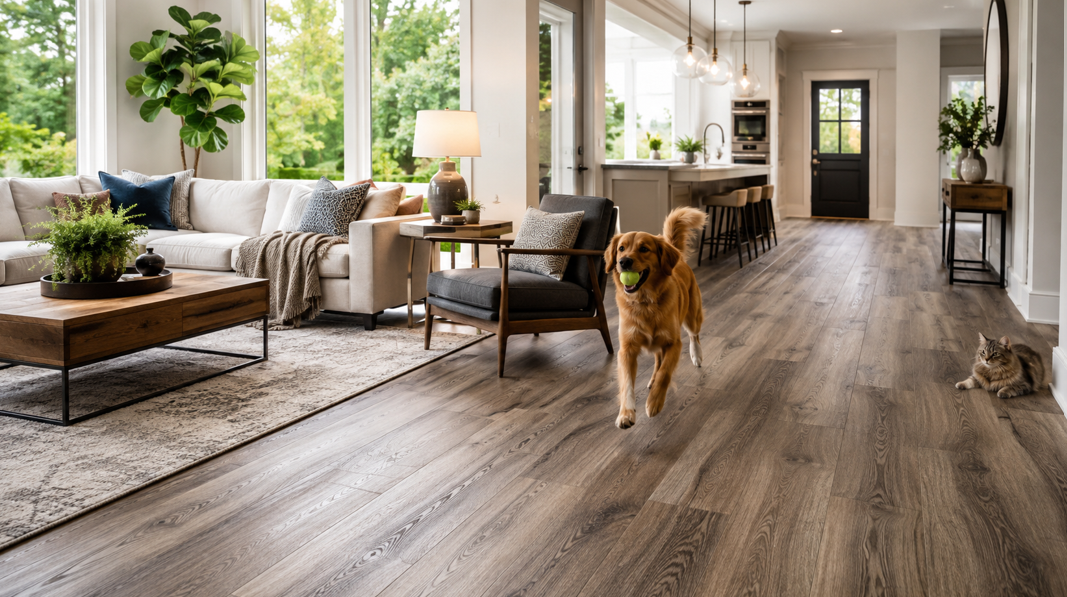
Choosing flooring reasonably close to a pet’s coat color can make shed fur less obvious. A medium oak tone may disguise tan or golden fur, while a soft gray-brown floor may work well in a home with pale or mixed-color pets.
The floor does not need to match the pet exactly. The goal is simply to avoid extreme contrast.
Favor Mid-Tone, Varied Designs
Mid-tone planks with natural variation are often forgiving. Multi-tonal wood visuals, subtle knots, and realistic grain patterns can conceal dust, fur, and small marks better than a flat, uniform finish.
Homeowners can browse luxury vinyl flooring in a range of wood looks, textures, colors, and plank widths to compare styles that complement their pets and interior design.
Be Careful With Very Dark Floors
Dark espresso and near-black floors can create a dramatic look, but they may show pale fur, dust, water spots, and fine scratches. They can still work in a pet-friendly home when the owner is comfortable with frequent cleaning.
A dark floor with visible grain and color movement will usually be more forgiving than a smooth, solid finish.
Review Samples in the Home
Redmond and Woodinville homes often receive softer daylight during cloudy months. A plank that looks balanced under showroom lighting may appear darker, cooler, or more reflective at home.
View samples during the morning, afternoon, and evening. Place them near exterior doors, water bowls, furniture, and the rooms where pets spend the most time.
Best Rooms for Pet-Friendly LVP
LVP can create a consistent visual flow through several connected rooms. Each area still brings different performance needs.
Entryways and Mudrooms
Entryways receive wet paws, mud, grit, and outdoor debris. Look for a durable product with a textured surface, strong residential rating, and enough color variation to disguise daily soil.
Use mats designed for vinyl flooring. Some rubber-backed mats may discolor certain products, so check the flooring manufacturer’s recommendations before placing them.
Kitchens and Dining Areas
Kitchens often contain water bowls, food spills, and repeated movement around cabinets and islands. Moisture resistance and easy cleaning make LVP a practical option.
Place a stable, vinyl-safe mat beneath feeding stations. Lift and clean beneath it regularly so moisture, crumbs, and grit do not remain trapped.
Living Rooms and Open-Plan Spaces
Large connected rooms benefit from consistent color and plank direction. For active pets, choose a finish that balances traction, comfort, and easy cleaning.
Use protective pads beneath sofas, chairs, pet crates, and other furniture that may move when pets run or play.
Hallways and Bedrooms
Hallways concentrate traffic into a narrow route, making a durable wear layer and stable locking system particularly valuable. Bedrooms may place greater emphasis on warmth, quietness, and easy fur removal.
Washable runners and pet beds can add softness in sleeping areas. Make sure their backing is suitable for LVP and does not trap moisture.
How Installation Affects Pet-Friendly Performance
A quality product can only perform as intended when the subfloor and installation are handled correctly.
Subfloor Preparation
LVP requires a clean, dry, and sufficiently flat surface. Uneven areas can place pressure on locking joints, create movement, or make the floor feel unstable.
Existing pet stains or moisture damage may need to be treated before the new flooring is installed. Covering the area without addressing the underlying concern can allow odors or damage to remain.
Expansion Space and Room Layout
Floating LVP generally requires expansion space around the room perimeter and fixed objects. This allows the floor to respond to normal environmental changes.
The required spacing varies by product. Installers also need to consider large rooms, connected layouts, doorways, transitions, and fixed cabinetry.
Plank direction influences how long, wide, or connected a room appears. Careful planning can also reduce narrow cuts in visible areas and create a natural flow between rooms.
Attached Pad and Underlayment
Some LVP includes an attached pad. Other products may permit or require separate underlayment. Adding an unapproved layer can create excess movement and may affect the locking system or warranty.
For upper floors, ask about sound-control ratings and approved underlayment options. This can make a noticeable difference when dogs frequently move through hallways or bedrooms.
Professional Installation
Licensed installers can evaluate subfloor flatness, moisture conditions, transitions, room dimensions, and door clearances before work begins. Proper preparation helps the flooring remain stable and creates a more polished finished result.
Everyday Care for LVP in a Home With Pets
Pet-friendly flooring still benefits from regular care. A few straightforward habits can prevent much of the visible wear caused by active animals.
Keep Pet Nails Trimmed
Regular nail trimming can reduce clicking, slipping, and surface scratches. Long nails concentrate pressure into smaller points, especially when a dog runs, turns, or stops suddenly.
Remove Grit Before It Spreads
Sand and grit can act like an abrasive beneath paws and shoes. Place flooring-safe mats at entrances, wipe damp paws, and sweep or vacuum busy areas regularly.
Use a vacuum suitable for hard-surface flooring. Avoid an active beater bar unless the LVP manufacturer approves it.
Clean Accidents Promptly
Blot and remove accidents as soon as possible. Follow the manufacturer’s cleaning guidance and avoid abrasive pads, waxes, oil soaps, steam mops, and unapproved chemicals.
Even when the planks are waterproof, liquid should not remain around edges, transitions, or wall perimeters.
Protect Feeding and Resting Areas
Use a stable, vinyl-safe mat beneath food and water bowls. Select bowls that are less likely to tip, particularly for large or enthusiastic pets.
Washable runners and pet beds can provide traction, warmth, and comfort. Clean beneath them regularly to prevent trapped moisture or grit.
Protect Furniture and Pet Equipment
Use approved protective pads beneath furniture, crates, gates, and feeding stations. Lift heavy objects instead of dragging them across the floor.
For rolling chairs or movable pet equipment, use accessories intended for resilient flooring.
Common Mistakes Pet Owners Can Avoid
A few purchasing and maintenance choices can reduce the performance of an otherwise suitable floor.
Choosing Based on Thickness Alone
Overall plank thickness can affect feel and locking-system strength, but it is not a complete measure of durability. The wear layer, finish, core construction, residential rating, and installation quality also matter.
Assuming Waterproof Means Maintenance-Free
Waterproof planks still need prompt cleanup. Moisture may move around room edges, beneath transitions, or into surrounding materials.
Selecting a High-Gloss Finish
Glossy flooring may look polished in a sample, but it can reveal scratches, paw prints, and dust more readily. Matte and lightly textured surfaces are often more forgiving.
Ignoring a Pet’s Mobility
A floor that feels comfortable to a person may be slippery for an older dog or a pet with joint concerns. Review the surface texture and consider washable runners in routes where extra traction would help.
Using the Wrong Cleaning Products
Harsh chemicals, oil soaps, waxes, abrasive tools, and steam can damage or dull some LVP surfaces. Follow the care directions for the exact product installed in the home.
Skipping an In-Home Sample Review
Color, texture, and gloss can look very different under a home’s lighting. Larger samples also make it easier to see how fur, dust, and paw prints may appear.
Finding the Right LVP for Your Pet-Friendly Home
The best LVP for a home with active pets combines practical construction with a style the homeowner will continue to enjoy. Look beyond one specification and consider the complete flooring system.
For large or highly active dogs, prioritize a robust wear layer, scratch-disguising texture, strong residential rating, and stable core. For older pets, focus on traction and consider washable runners where extra footing is helpful. Homes with several animals may benefit from varied mid-tone colors that make fur, dust, and paw prints less noticeable.
Room conditions matter as well. Entryways and kitchens need dependable moisture performance and simple cleanup. Living rooms benefit from comfort and sound control. Hallways need durable joints and a finish that handles concentrated traffic.
Eastside Carpets & Floors brings more than 30 years of flooring experience to homes across Redmond, Woodinville, and nearby Eastside communities. Through its mobile showroom, homeowners can compare LVP samples beside their cabinets, furniture, paint, and existing flooring. Free in-home estimates also provide an opportunity to review measurements, subfloor conditions, transitions, and installation needs.
Ready to find flooring that fits your pets, your home, and your daily routine? Reach out to us to arrange a shop-at-home consultation with the Eastside Carpets & Floors team.


