
Why Seasonal Temperature Swings Affect Flooring
If you’ve lived in the Pacific Northwest for any length of time, you’ve probably noticed how quickly the seasons shift. One week it’s cool and damp, the next brings a stretch of dry warmth. These changes might feel subtle, but they can have a noticeable impact inside your home—especially on your flooring.
Temperature and humidity naturally fluctuate throughout the year in areas like Redmond, Bellevue, and Issaquah. Winters tend to bring cooler air and higher moisture levels, while summer introduces warmer temperatures and drier conditions. Even indoor heating systems can create changes that affect how materials behave over time.
Flooring materials expand when exposed to warmth and contract when temperatures drop. While this movement is often minimal, it becomes more visible in certain materials. Homeowners may begin to notice small gaps forming between planks, slight shifting underfoot, or changes in how the floor looks across different seasons.
These issues don’t necessarily mean something is wrong—it’s simply how materials respond to their environment. The real difference comes down to how well a flooring product is designed to handle those changes.
At Eastside Carpets & Floors, many homeowners are turning to Luxury Vinyl Plank (LVP) because it offers a balance of durability and flexibility. Unlike more rigid or natural materials, LVP is engineered to adapt to temperature changes without compromising its appearance.
Choosing the right flooring means thinking beyond how it looks on day one. It’s about how it performs through every season, keeping your home comfortable and visually consistent year-round.
What Causes Gaps in Flooring?
Gaps in flooring can be frustrating, especially when they seem to appear without warning. Understanding why they happen makes it much easier to prevent them.
Temperature Changes
All flooring materials respond to temperature. When the air warms up, materials expand slightly. When temperatures drop, they contract. Over time, this natural cycle can create small spaces between planks if the material isn’t designed to handle it well.
Humidity Levels
Humidity plays an equally important role. Higher moisture levels in the air can cause some flooring types to absorb that moisture and expand. When the air becomes drier, the material contracts again. This repeated movement can lead to visible gaps.
Improper Installation
Even the best flooring can struggle if it isn’t installed correctly. Without proper spacing around the edges or adequate preparation, flooring doesn’t have the room it needs to adjust naturally. That restriction can lead to shifting or separation over time.
Material Limitations
Some materials are simply more prone to movement than others. Traditional hardwood, for example, can be more sensitive to environmental changes. Modern alternatives like LVP are designed to minimise this issue through advanced construction.
The key takeaway is simple: gaps aren’t just about wear and tear—they’re about how well your flooring is built to handle the environment it’s in.
How LVP Is Designed to Handle Expansion and Contraction
Luxury Vinyl Plank isn’t just another flooring option—it’s a product built specifically to handle real-life conditions. Its construction is what sets it apart.
Layered Construction
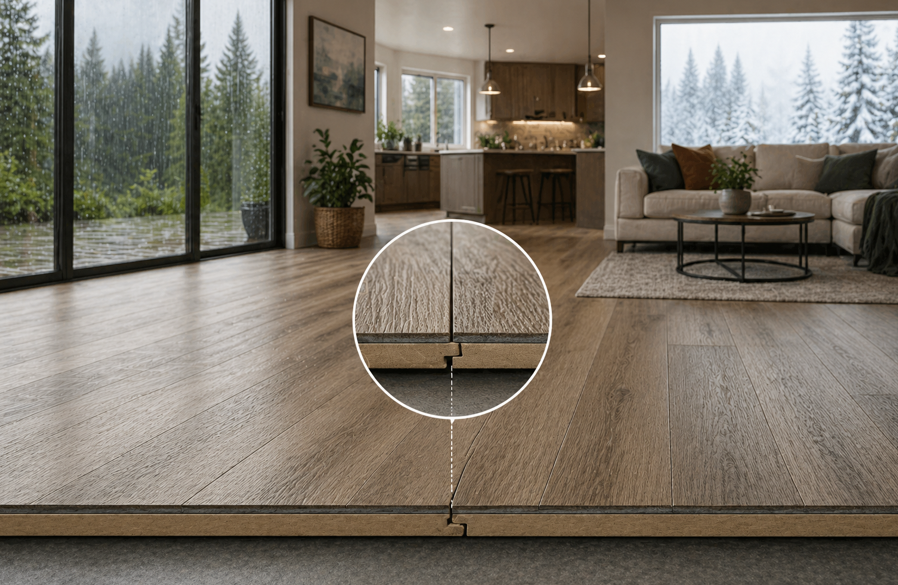
LVP is made up of multiple layers, each designed to serve a purpose. The top wear layer protects against scratches and daily wear, while the core layer provides stability. The backing adds support and helps maintain structure.
This layered design allows the flooring to remain stable even as conditions change.
Rigid Core Technology
Many modern LVP products use rigid core technology, such as SPC (Stone Plastic Composite) or WPC (Wood Plastic Composite). These cores are engineered to resist expansion and contraction far more effectively than traditional materials.
They provide a strong foundation that helps keep planks aligned and consistent.
Floating Floor Systems
LVP is often installed as a floating floor, meaning it isn’t glued or nailed directly to the subfloor. Instead, planks connect through a click-lock system. This allows the floor to move slightly as temperatures change without causing damage or separation.
Flexibility and Strength
One of the biggest advantages of LVP is its ability to balance flexibility with durability. It can adapt to environmental changes while maintaining its structure.
Key advantages include:
Dimensional stability that reduces visible gaps
Resistance to warping in changing conditions
Long-term performance in active households
This combination makes LVP a dependable choice for homes that experience seasonal shifts.
Best Types of LVP for Seasonal Stability
Not all LVP products are the same. Some are specifically designed to perform better in environments with temperature fluctuations.
SPC (Stone Plastic Composite)
SPC flooring is known for its rigid structure and exceptional stability. It handles temperature changes well and is less likely to expand or contract noticeably.
WPC (Wood Plastic Composite)
WPC offers a slightly softer feel underfoot while still maintaining strong stability. It’s a great option for homeowners who want both comfort and performance.
Thicker Wear Layers
A thicker wear layer adds durability and helps the flooring maintain its appearance over time. It also contributes to overall stability.
Quality Locking Systems
A strong locking system ensures that planks stay securely connected, reducing the risk of separation.
When exploring luxury vinyl flooring, focusing on these features helps ensure your flooring performs consistently throughout the year.
Where Stable LVP Makes the Biggest Difference
LVP can be used throughout the home, but its stability becomes especially valuable in certain areas.
Open-Concept Living Areas
Large, open spaces can make flooring movement more noticeable. Stable LVP helps maintain a seamless look across the entire area.
Sun-Exposed Rooms
Rooms with large windows or direct sunlight often experience more temperature variation. LVP designed for stability helps prevent visible changes.
Basements and Lower Levels
Cooler environments can affect some flooring types, but LVP remains consistent, making it a reliable option for these spaces.
Kitchens and High-Traffic Areas
In busy areas, flooring needs to handle both movement and daily wear. LVP delivers on both fronts, keeping your home looking polished.
Installation Factors That Prevent Gaps
Even the best flooring needs proper installation to perform at its best.
Expansion Gaps Around Edges
Leaving space around the edges of a room allows the flooring to expand and contract naturally. This prevents pressure from building up between planks.
Subfloor Preparation
A clean, level subfloor creates a stable base for installation. Any unevenness can affect how the flooring sits and moves.
Acclimation Process
Before installation, LVP should be allowed to adjust to the room’s temperature and humidity. This step helps minimise movement after installation.
Professional Installation Benefits
Working with experienced installers ensures that every detail is handled correctly. From preparation to finishing touches, professional installation supports long-term performance.
How to Maintain LVP Through Seasonal Changes
Maintaining LVP is straightforward, and a few simple habits can make a big difference.
Maintain Consistent Indoor Temperature
Keeping your home at a steady temperature helps reduce the amount of expansion and contraction.
Control Humidity Levels
Using a humidifier or dehumidifier can help maintain balanced indoor conditions, especially during seasonal transitions.
Regular Cleaning
Sweeping and mopping keep the surface clean and prevent debris from affecting the flooring.
Inspect Flooring Periodically
Occasionally checking your flooring allows you to spot minor issues early and address them before they become noticeable.
These small steps help keep your flooring looking its best throughout the year.
Signs Your Current Flooring Isn’t Handling Seasonal Changes Well
If your current flooring isn’t performing well, it will usually show clear signs.
Gaps forming between planks
Warping or uneven surfaces
Noise when walking across the floor
Changes in alignment over time
These issues can affect both the appearance and comfort of your home. Upgrading to a more stable flooring solution can restore consistency and improve everyday living.
Choosing the Right LVP for Your Home and Lifestyle
Every home has different needs, so choosing the right flooring involves a bit of thoughtful planning.
Consider:
The size and layout of your space
How much sunlight each room receives
Daily activity levels and foot traffic
Your personal design preferences
Balancing these factors helps ensure you select flooring that not only looks great but also performs reliably.
Enjoy Flooring That Looks Great in Every Season
Flooring should feel dependable, no matter what the weather brings. With the right LVP, you can enjoy a space that stays consistent through changing temperatures, busy days, and everyday life.
At Eastside Carpets & Floors, homeowners find flooring solutions that combine style, durability, and long-term performance. With expert guidance and professional installation, the process becomes simple and rewarding.
If you’re ready to upgrade your flooring and enjoy a more stable, polished space, you can always get in touch to explore your options.


