
Why Slip Resistance Matters in Kitchens and Bathrooms
Kitchens and bathrooms ask more from flooring than almost any other rooms in the home. Water splashes around sinks, cooking spills happen without warning, wet shoes cross the kitchen, and bathroom floors can become damp after showers or baths. When those everyday conditions are part of the room, traction deserves just as much attention as color, durability, and design.
For Bellevue homeowners, luxury vinyl plank is appealing because many products combine realistic wood or stone looks with water-resistant or waterproof constructions, straightforward maintenance, and comfortable everyday performance. However, not every LVP product offers the same level of traction, and no flooring surface can guarantee that someone will never slip.
That is why the better goal is to choose flooring with documented slip-resistance characteristics, appropriate wet-area performance, and a surface finish suited to the way the room is used.
At Eastside Carpets & Floors, homeowners can compare LVP based on more than appearance. Texture, finish, manufacturer testing, installation requirements, water performance, and care instructions can all help determine whether a floor is a sensible match for a busy kitchen or bathroom.
This matters for households of all ages. The Centers for Disease Control and Prevention identifies wet or slippery floors among common household fall hazards and recommends making bathrooms safer with measures such as non-slip surfaces and appropriate grab bars where needed.
When shopping for LVP for a kitchen or bathroom, pay particular attention to:
Documented slip-resistance information
Surface texture and finish
Manufacturer approval for the intended room
Waterproof or water-resistant performance
Cleaning requirements
Installation method
Subfloor preparation
Household needs, including children, pets, and older adults
A stylish floor can still be practical. The key is knowing which features actually matter.
What Does “Slip-Resistant LVP” Really Mean?
Slip-resistant does not mean slip-proof.
Any hard flooring can become more slippery when water, cooking oil, soap, cleaning residue, or other contaminants are left on the surface. Even manufacturers that describe their luxury vinyl as slip-resistant caution that moisture can change how the flooring feels underfoot. Karndean, for example, states that its floors are designed for slip resistance while also noting that water and other moisture can make flooring slippery.
That distinction is important because homeowners sometimes expect a textured floor to eliminate slipping altogether. It cannot.
Look for Testing, Not Just Marketing Language
Words such as “textured,” “embossed,” and “matte” describe how a product looks or feels, but they do not automatically prove a particular level of traction.
When slip resistance is a priority, ask whether the specific flooring collection has been tested for slip performance and whether the manufacturer publishes those results or suitability guidance.
Flooring manufacturers may use different test methods, so avoid comparing isolated numbers unless the tests themselves are equivalent.
A knowledgeable flooring professional can help you interpret available specifications instead of relying on a package label alone.
Room Suitability Matters Too
A product designed for a dry bedroom does not automatically belong in a bathroom.
Check whether the manufacturer approves the flooring for:
Kitchens
Powder rooms
Full bathrooms
Laundry areas
Other spaces where spills or splashes are expected
Some luxury vinyl products are suitable for bathrooms but not for walk-in showers or true wet-room installations. Karndean, for example, promotes LVT for bathroom use while specifically noting that its flooring is not intended for walk-in showers or wet rooms.
That is a good reminder to follow product-specific instructions rather than assuming “waterproof” means suitable for every wet environment.
Best LVP Features for Better Traction
When you compare LVP for a Bellevue kitchen or bathroom, several characteristics deserve closer attention.
Textured Surface Finishes
A surface with noticeable texture can feel more secure underfoot than a highly polished, glossy finish, but texture alone is not enough to establish slip performance.
Look for realistic wood grain, embossed textures, stone-inspired surfaces, or low-sheen finishes and then verify what the manufacturer says about traction.
For wood-look LVP, embossing can also improve realism by adding grain detail beneath your feet rather than leaving the floor completely smooth.
Matte and Low-Sheen Finishes
High-gloss flooring can look dramatic, but kitchens and bathrooms often benefit visually from matte or low-sheen finishes.
These surfaces can:
Create a more natural wood or stone appearance
Reduce the visibility of water spotting
Show fewer everyday smudges
Pair well with contemporary Bellevue interiors
A matte appearance does not automatically mean a product has superior slip resistance, so manufacturer testing still matters.
Waterproof Performance
Traction and water resistance are separate characteristics.
A product can be waterproof without being particularly slip-resistant, and a textured product can still require careful water cleanup.
For kitchens and bathrooms, consider LVP or LVT specifically approved for moisture-prone residential spaces. Karndean describes its US bathroom LVT as waterproof and easy to wipe clean, while its room guidance similarly positions waterproof luxury vinyl for kitchens where spills are common.
Always verify the specifications of the exact collection being considered.
Durable Surface Protection
Kitchens receive heavy traffic, moving chairs, dropped utensils, pet activity, and frequent cleaning. Bathrooms see regular water exposure and cleaning products.
A durable wear surface can help the flooring maintain its finish under those conditions.
When comparing products, ask about:
Wear-layer specifications
Scratch resistance
Stain resistance
Cleaning recommendations
Residential warranty
Pet suitability
Manufacturer restrictions
These details do not directly determine slip resistance, but they affect how well the surface retains its intended performance and appearance over time.
Homeowners comparing these features can explore available luxury vinyl flooring and then narrow the choices according to room conditions, texture, water performance, and manufacturer guidance.
LVP Options That Work Well in Bellevue Kitchens
A kitchen floor needs to handle much more than an occasional splash. It can experience water near sinks and dishwashers, grease around cooking areas, pet bowls, chair movement, groceries coming through the door, and daily family traffic.
That makes kitchens a good place to prioritize both traction and cleanability.
Textured Wood-Look LVP
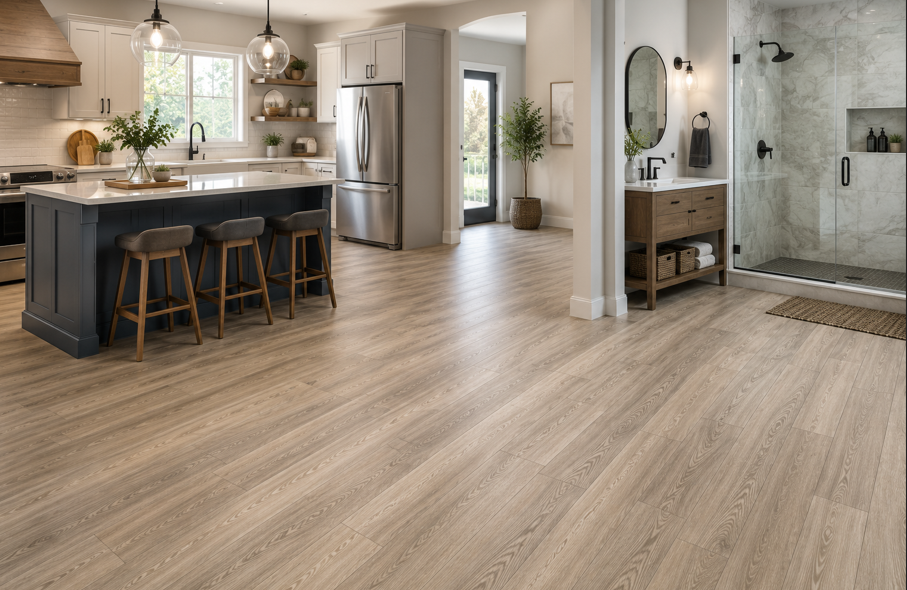
Wood-look LVP remains one of the most flexible kitchen options because it can connect the kitchen visually with dining rooms, living areas, and hallways.
For traction-conscious households, look for collections with:
Noticeable but comfortable embossing
Matte or low-sheen surfaces
Manufacturer slip-testing information
Water performance appropriate for kitchens
Easy-clean finishes
Natural oak, warm blonde, medium brown, and greige wood visuals can all work well in Bellevue interiors.
Stone-Look Luxury Vinyl Tile
Stone-look LVT can be an attractive alternative when the kitchen design leans contemporary or transitional.
It can create the appearance of:
Limestone
Slate
Concrete
Travertine
Marble-inspired stone
without requiring homeowners to choose natural stone itself.
Karndean notes that its luxury vinyl products designed to replicate stone are slip-tested and suitable for areas where splashes are likely, including kitchens and bathrooms.
Again, treat that as product-manufacturer guidance rather than assuming every stone-look vinyl floor has identical characteristics.
Avoid Choosing by Appearance Alone
A deeply textured sample may seem like the obvious “safe” choice, but comfort and cleanability also matter in a kitchen.
Extremely aggressive textures can sometimes hold more debris or require additional cleaning attention. The goal is a practical balance between surface grip, easy maintenance, and the manufacturer’s tested performance.
LVP Options for Bellevue Bathrooms
Bathrooms introduce another challenge: bare feet.
A floor that feels comfortable under shoes may feel very different when someone steps onto it after a shower. Water, soap residue, lotions, and cleaning products can all affect traction.
Prioritize Bathroom-Approved LVP or LVT
Before discussing color or plank width, verify that the specific product is approved for bathroom installation.
Many contemporary luxury vinyl products are designed for bathroom use. Karndean describes its bathroom LVT as waterproof and highlights its comfortable feel underfoot compared with ceramic or porcelain.
Product suitability still varies, so always check installation instructions and warranty terms.
Consider a Textured Wood Look
Wood-look LVP can create a warmer bathroom aesthetic than traditional tile.
It works particularly well in Bellevue homes with:
Natural wood vanities
White cabinetry
Warm neutral walls
Freestanding tubs
Contemporary fixtures
Spa-inspired design schemes
Choose a collection with documented wet-area suitability and an appropriately textured finish rather than choosing based entirely on the grain pattern.
Stone-Look LVT Can Create a Spa-Like Feel
For homeowners who prefer a tile-inspired bathroom, stone-look luxury vinyl can create a polished appearance without the same cold feel associated with some natural hard-surface materials.
Soft limestone tones, warm concrete looks, travertine visuals, and muted slate designs can all complement contemporary bathrooms.
Keep LVP Outside the Shower Enclosure Unless Specifically Approved
Waterproof flooring and shower flooring are not automatically the same category.
A manufacturer may approve LVP across the general bathroom floor while excluding:
Shower pans
Walk-in showers
Wet rooms
Continuously submerged areas
Follow those restrictions carefully.
The best-looking bathroom floor is still the wrong choice if it is installed somewhere the manufacturer does not approve.
How to Compare Slip-Resistance Information
Flooring specifications can become technical quickly, but homeowners do not need to become laboratory-testing experts.
Ask practical questions.
Has This Exact Product Been Slip Tested?
Do not settle for a general statement about the entire flooring category.
Ask whether the specific collection you are considering has documented slip-resistance testing.
Does the Manufacturer Discuss Wet Conditions?
Dry traction and wet traction can be different.
Because kitchens and bathrooms are specifically exposed to moisture, look for information relevant to spills, splashes, and wet conditions rather than specifications that only describe a dry floor.
Which Testing Method Was Used?
Different flooring companies may report different measurements and testing standards.
That means two numbers cannot necessarily be compared directly.
Instead of chasing the highest number on a specification sheet, ask a flooring professional to help explain:
What was tested
Whether the test involved wet or dry conditions
Which standard was used
What the manufacturer says about suitable applications
Does the Warranty Allow the Planned Installation?
A floor may perform well technically but still have restrictions in its warranty.
Before installation, confirm whether the product is approved for the exact location and follow its requirements regarding adhesives, underlayment, expansion space, perimeter detailing, and moisture conditions.
Installation Plays a Major Role in Floor Safety
Selecting the right LVP is only part of creating a practical kitchen or bathroom.
The installation itself needs attention.
Start With a Properly Prepared Subfloor
Uneven areas can create movement, raised edges, or irregular transitions.
The subfloor needs to meet the flooring manufacturer’s requirements for flatness, cleanliness, dryness, and structural condition.
Keep Transitions Smooth
Where LVP meets carpet, tile, hardwood, or another flooring material, the transition needs to be carefully planned.
An abrupt height difference can create a trip point even when both flooring surfaces provide good traction.
This is especially important around:
Bathroom entrances
Kitchen-to-hallway transitions
Laundry rooms
Open-plan living areas
Door thresholds
Follow Water-Related Installation Requirements
Bathrooms and kitchens may require additional attention around room perimeters, fixtures, cabinets, and other potential water-entry points.
Installation instructions vary considerably between manufacturers and between floating, glue-down, and other luxury vinyl systems.
Do not assume that one installation method is automatically more slip-resistant than another. Surface traction comes from the flooring product and its condition, while installation affects stability, transitions, and overall floor performance.
Everyday Habits Still Matter After Installation
Even well-selected slip-resistant LVP needs sensible household care.
Wipe Up Water Promptly
Do not leave puddles around:
Kitchen sinks
Dishwashers
Refrigerators
Pet bowls
Bathroom vanities
Tubs
Showers
Karndean specifically cautions that moisture can make flooring slippery even when the product itself is designed with slip resistance in mind.
Clean Cooking Spills Quickly
Oil and grease can be particularly important in kitchens because they may leave a slick surface even when the spill looks small.
Clean them using the flooring manufacturer’s recommended method.
Avoid Unapproved Polishes and Cleaners
A cleaner that leaves a residue can change how the surface feels underfoot.
Avoid waxes, polishes, oil-based treatments, or household cleaning products unless the flooring manufacturer specifically approves them.
More shine is not necessarily better in a kitchen or bathroom.
Be Careful With Rugs and Mats
A mat can absorb water near a sink or outside a shower, but a loose mat can create its own trip or slip hazard.
Choose mats appropriate for hard flooring, keep them flat, and consider non-slip backing where suitable. CDC fall-prevention guidance specifically addresses slippery bathroom surfaces and recommends non-slip solutions in bathing areas.
Keep the Room Well Lit
Flooring is only one part of home safety.
Good lighting makes water, objects, floor transitions, and other potential hazards easier to see. This can be particularly useful at night in bathrooms or kitchens used early in the morning.
Choosing LVP for Children, Pets, and Aging-in-Place Homes
Different households may place different levels of importance on traction.
Homes With Young Children
Children move quickly and spills happen frequently.
Look for LVP that combines:
Wet-area suitability
Straightforward cleaning
Durable surface performance
Tested slip-resistance characteristics
A comfortable everyday feel
The easier a spill is to notice and clean, the easier it is to keep the room ready for family life.
Homes With Active Pets
Pet bowls, wet paws, and quick turns through the kitchen can add another layer of daily activity.
Consider scratch resistance and cleanability alongside slip performance.
Pets can also bring rainwater indoors during Bellevue’s wetter months, making entry and kitchen areas worth extra attention.
Aging-in-Place Households
For older adults, flooring is one element of a broader fall-prevention plan.
The CDC recommends addressing household trip hazards, improving lighting, adding bathroom grab bars where appropriate, and making slippery bathing surfaces safer.
A traction-conscious LVP choice may support that broader plan, but flooring alone cannot eliminate fall risk.
Style Still Matters in a Safety-Conscious Floor
Choosing traction-conscious flooring does not mean settling for an institutional-looking surface.
Modern luxury vinyl offers a wide range of wood and stone visuals.
Natural Oak for Warm Bellevue Interiors
Natural oak works with:
White cabinetry
Warm wood cabinets
Quartz countertops
Matte black hardware
Brass fixtures
Warm neutral walls
Its balanced coloring also transitions easily from kitchens into adjoining living spaces.
Mid-Tone Floors Can Improve Visual Definition
Very pale floors can make small water droplets harder to notice in some lighting conditions, while extremely dark floors may show every mark.
A medium wood or stone tone can offer a practical visual balance.
That said, visibility depends on lighting, pattern, sheen, and the spill itself. Do not select flooring color as a substitute for traction performance or prompt cleanup.
Matte Finishes Suit Contemporary Homes
Matte and low-sheen finishes fit particularly well with the understated contemporary designs seen throughout Bellevue.
They can also make a floor look more natural under large windows and bright kitchen lighting.
See Samples in the Actual Room
Color and texture can change dramatically between a showroom and your home.
Eastside Carpets & Floors offers a mobile showroom that brings flooring samples into the customer’s own space. The company notes that natural lighting, furniture, wall colors, and cabinetry can all influence how a flooring option looks once it is home.
For a kitchen or bathroom, use the visit to evaluate more than color.
Stand on the sample. Feel the surface texture. Compare it near the sink, vanity, cabinets, and adjoining flooring. Ask about the product’s testing, water-performance claims, cleaning instructions, and installation requirements.
Choose LVP Based on Verified Performance and Real-Life Use
There is no single “safest LVP” for every Bellevue kitchen or bathroom.
A family kitchen with children and pets has different priorities from a guest bathroom used occasionally. An aging-in-place primary suite may require another level of attention to traction, transitions, lighting, and accessibility.
Before selecting a floor, ask:
Is this exact product approved for kitchens or bathrooms?
Is it waterproof or water resistant?
Has the manufacturer published slip-resistance information?
Was wet-condition performance considered?
What type of surface texture does it have?
Which cleaners are approved?
Are polish or wax products prohibited?
What does the warranty require?
What installation method is recommended?
Are there restrictions around showers or wet rooms?
How will the floor transition into adjacent rooms?
Does the product fit the needs of children, pets, or older household members?
The strongest choice combines verified manufacturer information with the practical realities of your household.
Bellevue homeowners can also benefit from seeing flooring samples in the rooms where they will actually be installed. A knowledgeable flooring professional can help compare texture, construction, water performance, design, manufacturer specifications, and installation requirements rather than relying on a broad “slip-resistant” label.
No flooring is completely slip-proof, especially when water, soap, grease, or other contaminants are present. A well-selected LVP product, prompt cleanup, correct installation, good lighting, and thoughtful household habits can work together to create a kitchen or bathroom that feels stylish, comfortable, and practical.
If you are planning new flooring in Bellevue, Redmond, Kirkland, Sammamish, Issaquah, Bothell, Woodinville, or a nearby Eastside community, get in touch with Eastside Carpets & Floors for personalized help comparing LVP options for your home.


